Enterprise Linux Is Coming to Edge AI: RHEL on NVIDIA Jetson Orin
Enterprise Linux Is Coming to Edge AI: RHEL on NVIDIA Jetson Orin
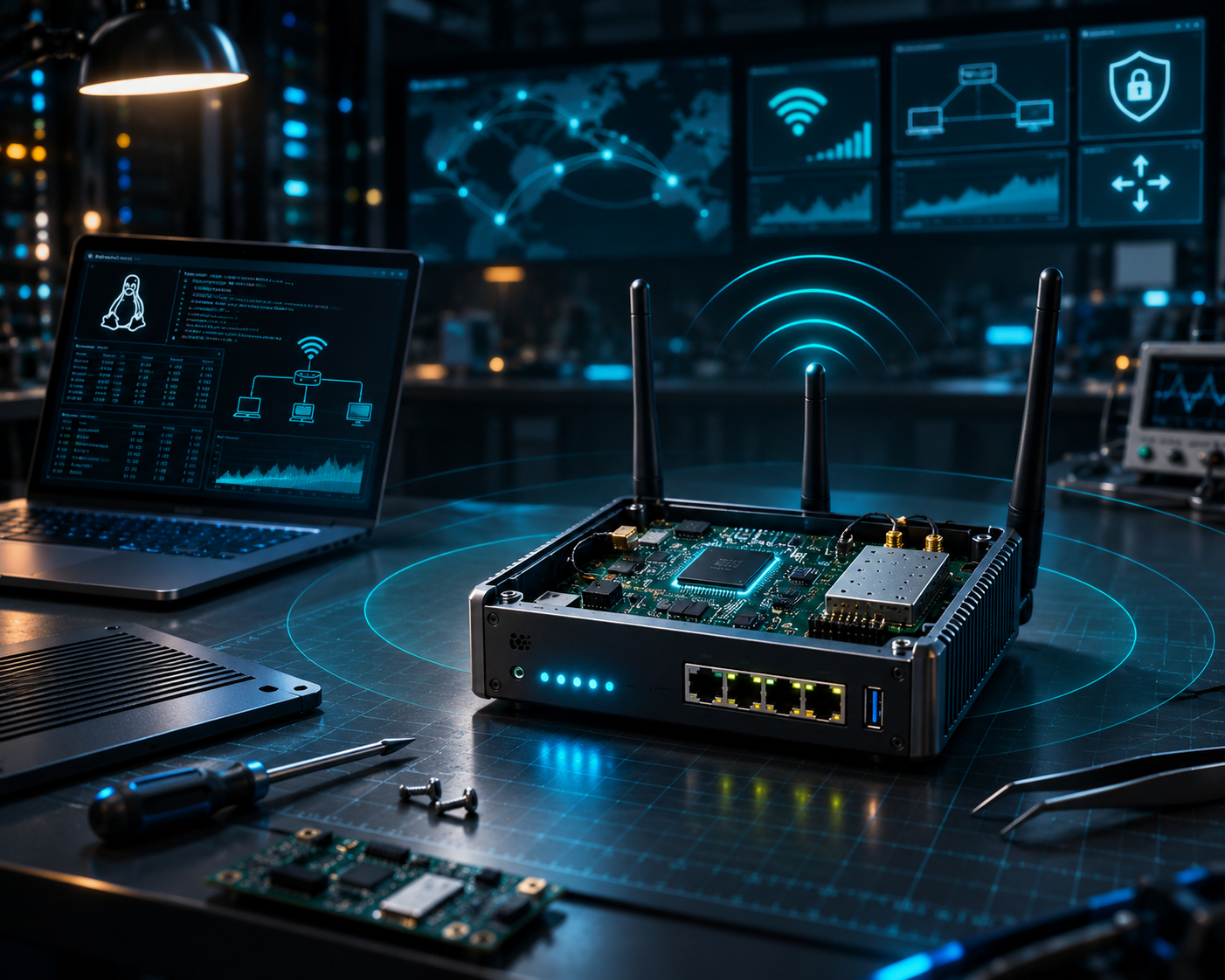
Enterprise Linux is coming to edge AI, and we are bringing it up on NVIDIA Jetson. Alongside our perception and driver-monitoring work on Jetson, we are now focusing on the operating system underneath it — because for a product that has to work reliably in the field for years, the OS matters as much as the model running on top of it.
Red Hat Device Edge Is Now Generally Available on Jetson Orin
Earlier this year, Red Hat made Red Hat Device Edge generally available on NVIDIA Jetson Orin, with RHEL 9.8. That is big news for edge AI: a supported, enterprise-grade Linux distribution, built for devices, running on one of the most widely used edge AI platforms.
It matters most in the industries where a device cannot simply be swapped out or left unpatched — places where long support lifecycles and dependable security updates are not a nice-to-have, but a requirement.
Medical
Devices that must stay supported and secure for years, through long certification and deployment cycles.
Industrial
Equipment on the factory floor and in the field, where downtime is costly and updates must be reliable.
Defense
Systems that demand dependable security updates and a supported platform they can rely on.
Transport
Vehicles and infrastructure that stay in service for a decade or more and need long-term support.
Real Products Do Not Run on Developer Kits
There is a catch, though. Red Hat’s support covers NVIDIA’s own developer kits, while real products run on custom carrier boards. Getting RHEL working properly on those boards is where the engineering happens.
A developer kit is a starting point, not a product. A production device has its own board, its own peripherals and its own constraints — and the operating system has to be brought up, tested and tuned for that exact hardware before it can be trusted in the field.
Bringing Up RHEL on Jetson Orin NX
Right now, our team is bringing up RHEL on Jetson Orin NX, making sure the board’s hardware, GPU acceleration and secure, reliable updates all work the way a production product needs them to.
The board, working properly
Getting RHEL running on the Orin NX module and its custom carrier board, so the hardware underneath the product behaves exactly as it should.
GPU acceleration
Making sure GPU acceleration works, so perception and other AI workloads on Jetson get the performance the hardware was built for.
Secure, reliable updates
Making sure updates are secure and reliable, so devices in the field can be kept up to date safely over a long service life.
Results as we go
This work is in progress. There are no results to report yet — we will share results as we go.
Why RHEL — and Not Ubuntu or Yocto?
For devices that stay in the field for 10 years or more, a supported OS with long-term security updates can save a lot of maintenance work. That is the core of the choice.
An edge AI product is not a short-lived experiment. It is deployed, it runs, and it needs to stay secure and supported for as long as it is in service. A supported enterprise distribution, with a long lifecycle and dependable security updates behind it, takes a large part of that maintenance burden off the product team — year after year.
Building Jetson Hardware or Edge AI Products That Need Enterprise Linux?
Let’s talk. Drop us a comment or send us a message — we would like to hear what you are building.
This article was originally shared on LinkedIn. Read the original post here: https://lnkd.in/p/eiTt9quK

Author